
Design, install, commission, maintain.
Seven disciplines under one company, for commercial, residential, mixed-use, industrial and public buildings across the UK.
Designed to the standard the building requires.
Every design begins with a survey. We design to the category of system the building and its fire risk assessment require, and issue drawings and schedules the installation team can build from.
- Category assessment and design to BS 5839-1
- Device layouts, zone plans and cause-and-effect schedules
- Loop loading, cable calculations and battery standby
- Construction-issue drawings and equipment schedules
- Aspirating and beam detection for large-volume and high-ceiling spaces
- Emergency voice and refuge system design to BS 5839-9
- Independent design review of existing systems prior to works
- Design variations formally recorded and agreed
Installed by Vanguard teams.
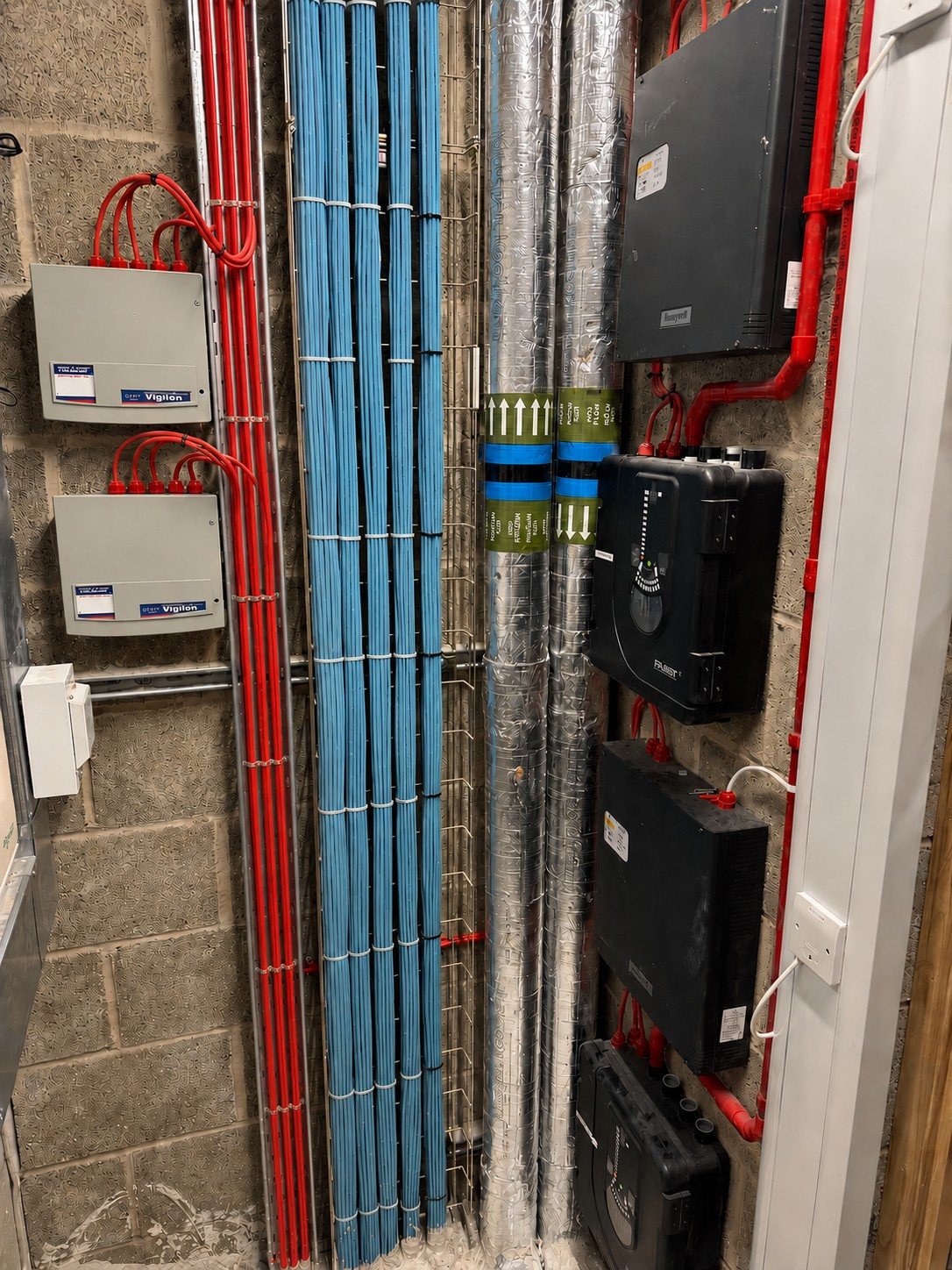
First and second fix for new build, fit-out, refurbishment and phased replacement, delivered by Vanguard's own installation teams nationwide. Containment routes are set out and agreed before installation begins, to a standard that remains presentable for the life of the system.
- New build, fit-out, retrofit and system replacement
- Metal and plastic containment, surface and concealed
- Addressable and conventional systems from all major manufacturers
- Works phased around occupied buildings and live systems
Proven, then certified.
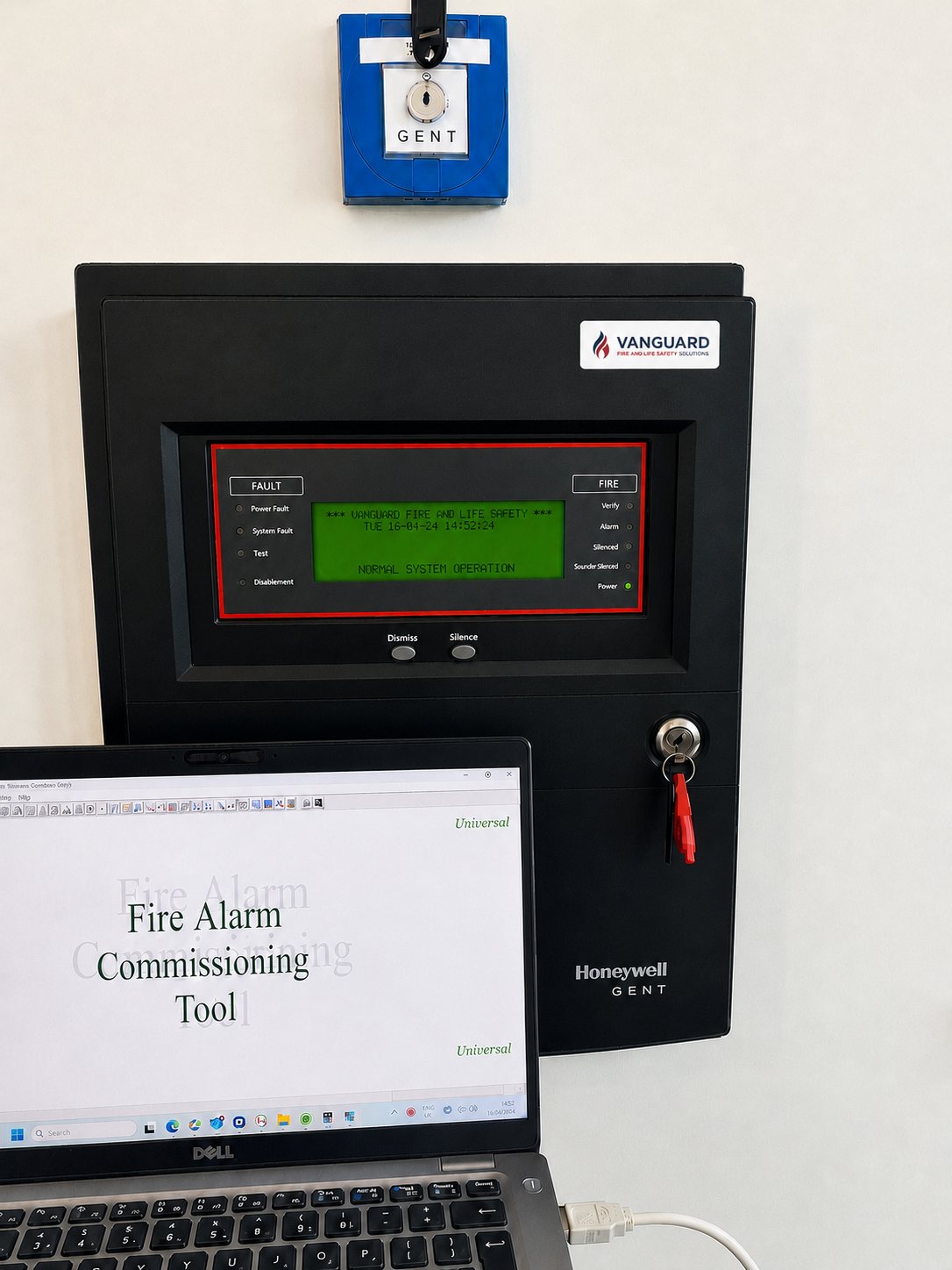
Every device tested and every cause and effect proven against the design, with certification issued on completion.
- Full device test and address verification
- Cause-and-effect proving, including interfaces and shutdowns
- Sound level testing and zone or area verification
- Certification, as-fitted drawings and log book set-up
- Client demonstration and handover training
BS 5839-1:2017 · BS 5839-9 · BS 8629
Serviced, tested, documented.
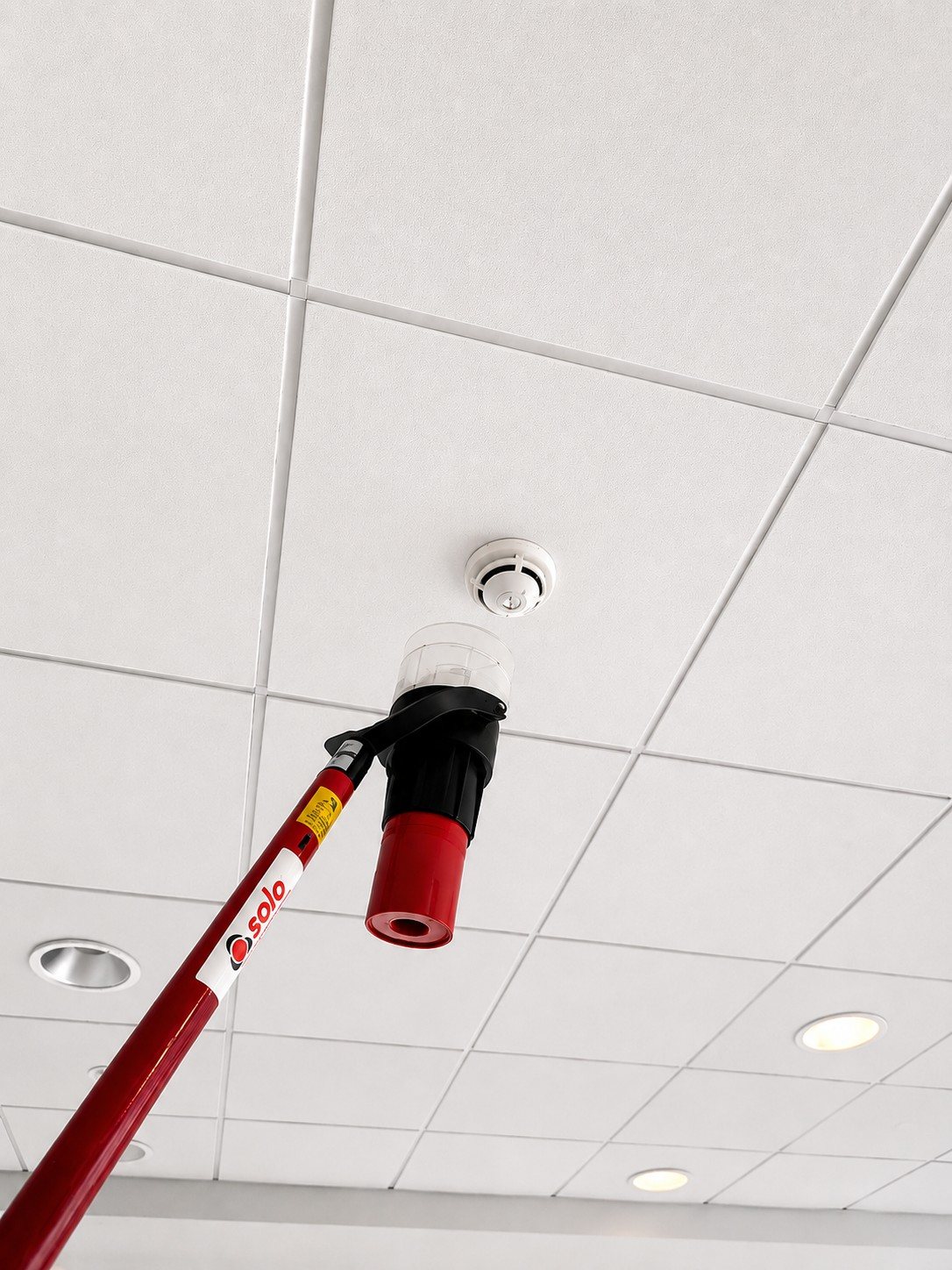
Planned servicing across single sites and multi-site estates, on a documented schedule that meets BS 5839-1 and the requirements of insurers and enforcing authorities, with reactive attendance for faults and repairs.
- Planned preventative servicing to BS 5839-1 frequencies
- Reactive repair, fault finding and callout attendance
- Device and battery replacement, panel firmware and configuration
- Log book upkeep and compliance documentation
- Takeover and rationalisation of estates with mixed legacy systems
Upgrades and remedial works.
Conventional and addressable systems from all major manufacturers, including the phased replacement of live systems while maintaining continuous protection throughout the works.
- Panel replacement and like-for-like device swaps
- Remedial works following a fire risk assessment or survey report
- Additional loops, interfaces and integration to an existing panel
- Detector head upgrades and system modifications
- Certificates of modification issued for altered systems
- Emergency repair and callout support
Clear communication when it matters.
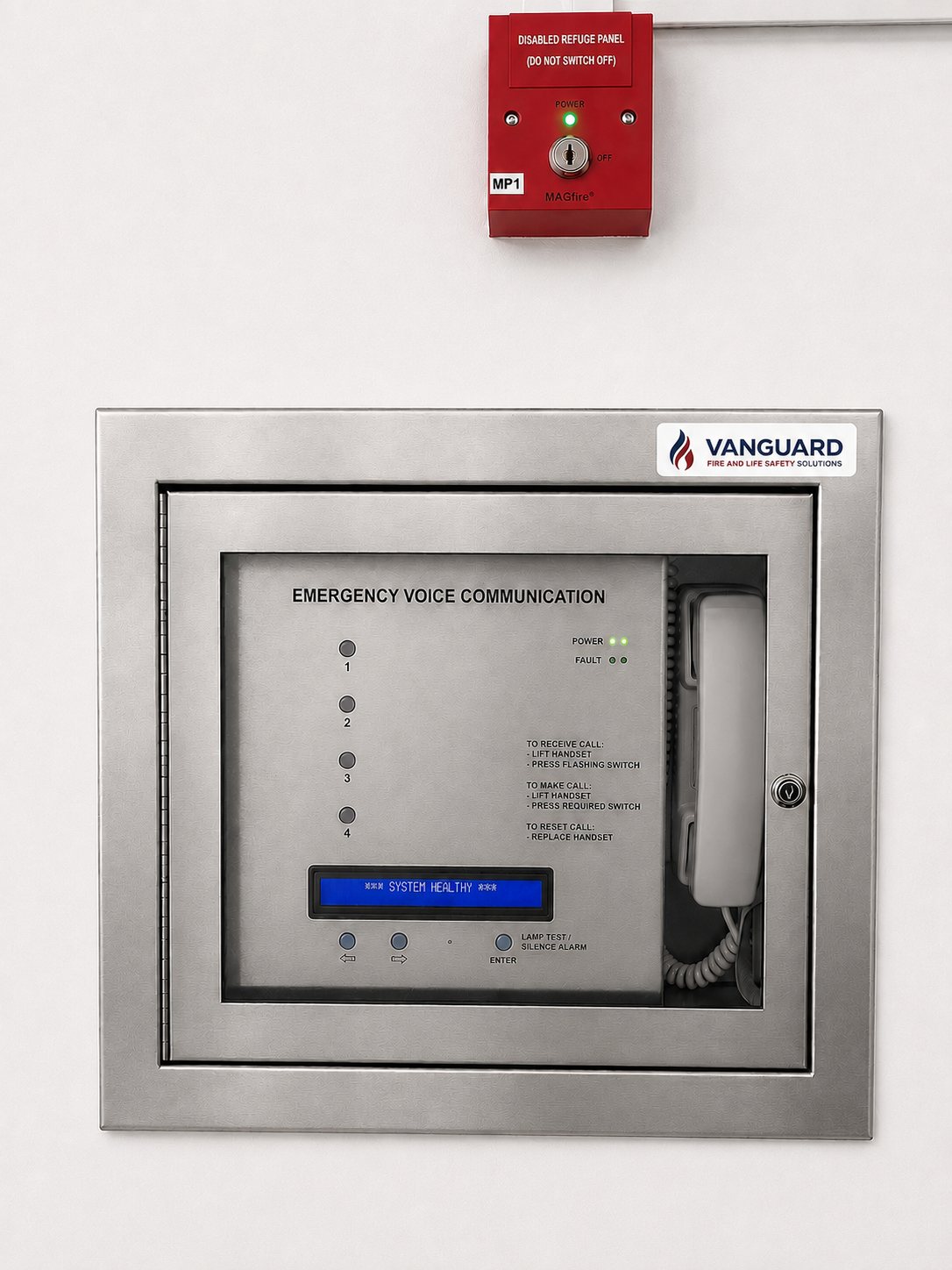
Emergency voice communication systems for refuge points, and accessible WC alarm systems, installed and maintained to BS 5839-9.
- EVCS master stations, outstations and refuge points
- Accessible WC alarm systems, including hybrid and wireless
- Annual testing, servicing and fault attendance
- Integration with the fire alarm system where required
When stay put has to change.
An evacuation alert system to BS 8629 gives the fire and rescue service a secure, independent means of telling residents of a high-rise block to leave, floor by floor, in the order the incident commander decides. It exists for the moment a stay-put strategy is no longer safe.
The system is entirely separate from the building's fire alarm: its own control panel in a fire-service-access enclosure, its own fire-resisting cabling, its own standby power, and sounders in every flat. It is operated only by the fire service, and it is designed never to be needed, but to work without question if it is.
- Design, installation and commissioning to BS 8629:2019+A1:2023
- Control panel in an LPS 1175-rated enclosure with fire-service key access
- Zoned floor by floor, arranged to mirror the building on the panel
- Enhanced fire-resisting cabling, segregated from all other services
- 72-hour standby power with 30 minutes of full evacuation signal
- Sounders and visual alarms in every flat, tested to the required sound levels
- Fire and rescue service consulted at design stage and briefed at handover
- Retrofit to existing blocks and new-build installations
BS 8629:2019+A1:2023

The legal duty behind every system.
Fire detection and alarm, emergency voice and evacuation alert systems are not optional extras. In England and Wales the law places clear, personal duties on whoever is responsible for a building to provide them, keep them working and prove it. The systems we install are how those duties are met.
The Fire Safety Order 2005
Appropriate detection and warning, kept in working order
The Regulatory Reform (Fire Safety) Order applies to virtually every non-domestic premises and to the common parts of blocks of flats. It names a responsible person, the employer, owner or managing agent, and requires them to equip the premises with appropriate fire detectors and alarms (Article 13) and to keep them maintained in efficient working order and good repair (Article 17), using competent persons to do so. Failure is a criminal offence.
Building Regulations, Approved Document B
Where alarm, voice and evacuation alert systems are specified
Approved Document B sets the standard for new and altered buildings. Fire detection and alarm systems are to be designed to BS 5839, refuges for people who cannot use stairs unaided are to be served by an emergency voice communication system to BS 5839-9, and since December 2022 new blocks of flats with a floor more than 18 metres above ground must have an evacuation alert system to BS 8629. The Equality Act 2010 adds the duty to plan how disabled people will escape, which is what refuge and voice systems exist for.
Fire Safety (England) Regulations 2022
Monthly checks of alarm and evacuation alert systems in high-rise blocks
In force since January 2023, these place recurring duties on the responsible person for residential buildings of 18 metres or seven storeys. Key firefighting equipment, which the government guidance lists as including fire detection and alarm systems and evacuation alert systems, must be checked at least monthly, with any fault that cannot be rectified within 24 hours reported to the local fire and rescue service. Residents must also be given clear fire safety instructions.
Building Safety Act 2022
The safety case for higher-risk buildings
For occupied residential buildings of 18 metres or seven storeys, the Act creates the accountable person, the Building Safety Regulator and a requirement to demonstrate, on an ongoing basis, that fire risks are being managed. Fire detection, emergency voice and evacuation alert systems, together with their design records, commissioning certificates and maintenance history, form a core part of that evidence.
The standards we work to
The law says what must be achieved; the British Standards say how. BS 5839-1 governs fire detection and alarm systems in non-domestic buildings and the common parts of flats; its categories (L1 to L5, P1 and P2) define how much of a building is covered. BS 5839-9 covers emergency voice communication and refuge systems. BS 8629 covers evacuation alert systems in blocks of flats. Every Vanguard system is designed, installed, commissioned and certified against the standard that applies to it, and the certificate we issue at handover is the responsible person's evidence that it was.
This is general information about the legislation as it applies in England and Wales and is not legal advice. Duties depend on the building, its use and its occupancy; the fire risk assessment for your premises is the starting point, and we are happy to discuss what it requires.
Protecting what’s built.
Tell us about the building.
Whether a single site or a national estate, send us the system type, panel manufacturer and an indication of scale, and the appropriate Vanguard team will respond with a scope and a quotation.